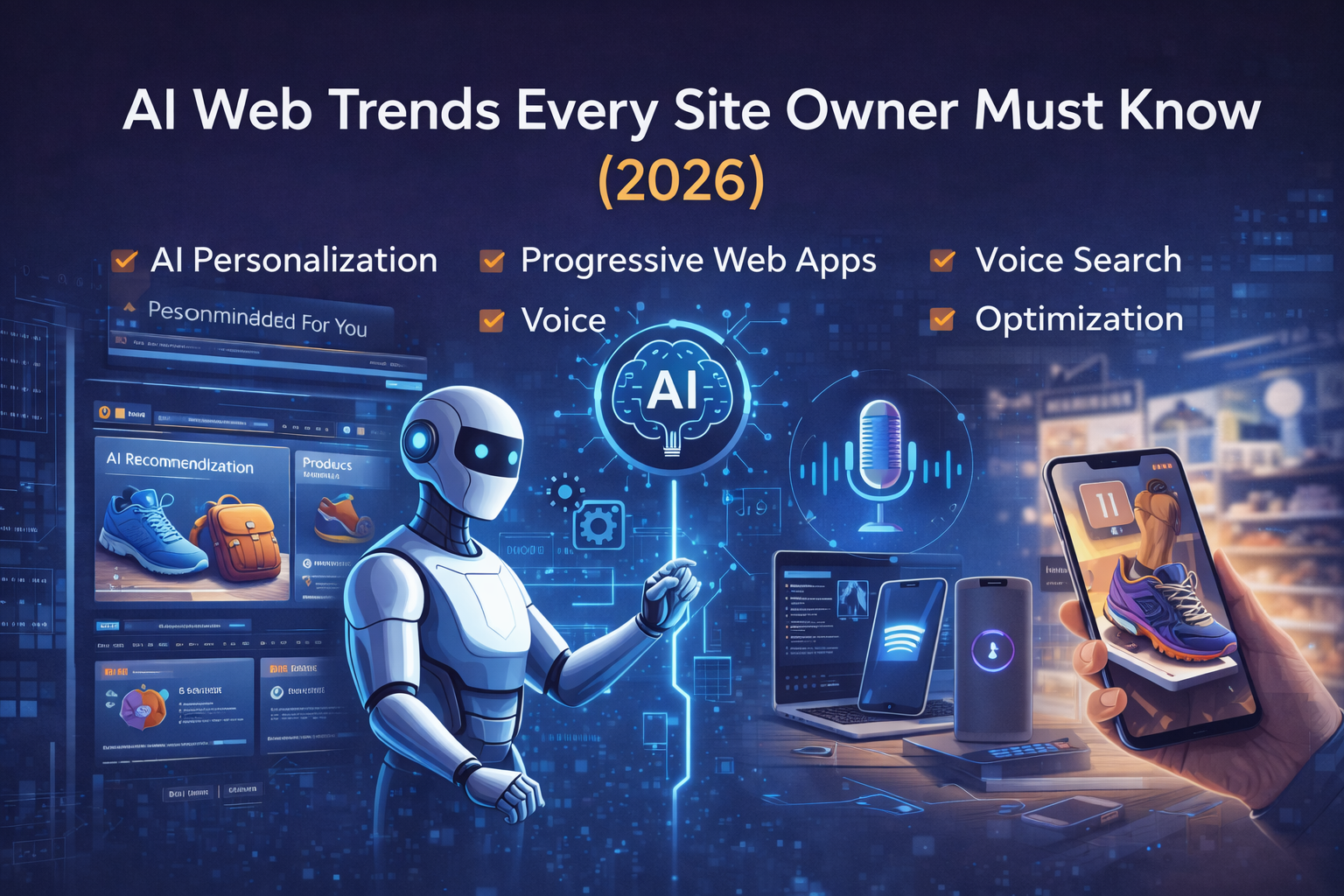

In 2026, websites are no longer static pages or simple information hubs. They’re becoming intelligent, adaptive digital experiences powered by artificial intelligence and modern web technologies. One major trend this year is AI-powered personalization, where sites dynamically adapt to users’ behavior, preferences, and needs in real time. Rather than showing the same page to every visitor, AI systems can tailor content, recommend products, and optimize interactions based on user data, making experiences feel personal and engaging. (Crossover)
Another game changer is the widespread adoption of Progressive Web Apps (PWAs) — sites that behave like native applications without requiring app store downloads. PWAs offer offline capabilities, fast load times, and seamless interactions across devices. Businesses of all sizes are embracing PWAs because they deliver app-like engagement at a lower cost and with better accessibility than traditional apps. (Crossover)
Voice search optimization has also become essential in 2026. As more users rely on smart assistants like Siri, Google Assistant, and Alexa, websites must incorporate natural language structure, conversational content, and schema markup to stay discoverable in voice-led searches. These queries are longer and context-rich, meaning content must be optimized for intent rather than traditional keywords. (Crossover)
Web development is also seeing a shift toward headless CMS and API-first architecture, where content is decoupled from the presentation layer. This approach gives developers flexibility to deliver consistent content across multiple platforms — websites, mobile apps, and devices — without being tied to a single framework. (Medium)
Design trends like Motion UI and micro-interactions are enhancing engagement by giving users feedback and visual cues as they navigate. Subtle transitions, hover effects, and animated elements not only make experiences feel modern but also improve usability and attention — keeping users on the page longer. (Seona Digital)
Finally, immersive experiences such as 3D visuals and AR are emerging on business sites, allowing customers to interact with products and services in ways that blur the line between digital and real worlds. These trends push websites beyond traditional layouts into interactive experiences that captivate audiences and drive conversions. (Green Fin Technologies)
For small business owners and founders, adapting to these 2026 trends means building websites that are not just functional but intelligent, engaging, and future-ready. The web has become a living experience — one that evolves with each user, device, and interaction.